

Matt Goddard
Third time’s a romance?
Taking on Emily Brontë’s gothic romance as a third directorial effort is a big ask. It’s not only the writer’s only novel, but a much-adapted tale that’s been bothering film awards for almost a century, and one so bursting with themes and dynasty, it’s frequently chopped in half on the big screen. Fortunately, Emerald Fennell isn’t short of vision.
Her first adaptation (on film, she was, of course, the showrunner of Killing Eve’s second season) is easy to pick holes in—they’re there like rocks scattered across the Yorkshire Moor. But it’s a vivid, fearless and entertaining feature, as long as you can accept Fennell’s eyes only obsessing over one thing.
It’s the stark Yorkshire Moors in the late 18th century, where young Catherine Earnshaw (Charlotte Mellington, then Margot Robbie) finds escape from the dark, tiled manor of Wuthering Heights by amusing herself at hangings with companion Nelly Dean (Vy Nguyen, then Hong Chau). Everything changes when her wasteful, abusive, and often drunk father (Martin Clunes) returns from town with a silent boy in tow (Owen Cooper, then Jacob Elordi). Gifted to Cathy as a pet, she names him Heathcliff after her late brother, and the pair grow up together, racing across the harsh landscape to find escape from the misery of their bleak home life.
As destitution surrounds Earnshaw and the Heights, promise comes when the immensely wealthy Edgar Linton (Shazad Latif) and his young ward (Alison Oliver) move into the nearby Thrushcross Grange. Cathy’s future could be secured by a match with the eligible bachelor, but can she cast off the dark, primal links she shares with her unpredictable soulmate, Heathcliff…
Fennell is intent on making her adaptation a straight tale of passion: requited, unrequited and mostly twisted. That pares out Brontë’s themes of cyclical families, regional nuance and class. Romeo and Juliet is literally written into the script so the story can fold around it, and characters morph around the idea of a legendary, mythical, doomed romance. Sex and lust are the film’s blood; in Fennell’s tunnel view, that’s what’s throbbing at the soul of the book, and she pursues it at the cost of much else.
The result is a searing, visceral, if uncomplicated take. As the story dwells on coercive relationships and jealousy, Fennell lifts and stylises the environment. The Moors will always be the Moors, the ancient constant pinned to Cathy and Heathcliff’s immortality. But hidden in it… The Earnshaw’s Heights doesn’t so much look like a house as a monolith hewn from Hell, covered in shiny black tiles and sunk between two vast jagged crags of granite. The Linton residence is a fairytale of bright greens and floral refinery, trimmed not into a large park but an ornate, over-staffed square garden, neatly hedged off from the moors and the real world. Only Clunes as Cathy’s wastral father may be having more fun than cinematographer Linus Sandgren.
Between the glittering diamond wallpaper of the Grange and the inky shine of the Heights, it’s a reflective puddle of unreality that serves the bursting, pulsating sense of sex and death. But Fennell goes a bit too far in chopping and merging characters.
Nelly, the tricksy, unreliable narrator of the book, is reframed as a manipulative, embittered proto-Heathcliff—an example of the corruption orbiting the self-obsessed Cathy. Clunes excels as he soaks up terrible traits from at least three characters in the book. An inverterate gambler, lashing out when inebriated, pleading for forgiveness when sober, he twists into a grotesque by his ambiguous end.
While the Heights is a barely living monument, the Grange is similarly shorn of characters. Linton isn’t weak as much as too nice and too wealthy. Isabella is more of a brat. But both have their moments, and the Grange intriguingly boasts more memorable scenes, perhaps hinting that some of the book’s themes can’t be easily subdued once the residents of the Heights invade. The chilling, abruptly framed scene in which Heathcliff takes ownership of Isabella is devastating.
Another superb sequence traps Cathy (to one of Charli xcx singing of her prison in one of her backing highlights), first in a dollhouse of Isabella’s making, then a bedroom of her husband’s—the walls the colour of her face, with plush panels speckled with her freckles. It’s all so promising, but things, oddly, fall apart when the lovers requite. After a stirring montage of Cathy slipping into marriage, the next, featuring Heathcliff and Cathy’s pent-up passion, is not so successful; it’s an almost laughable slump that doesn’t help set up the end.
With fewer characters to intimidate and manipulate, this Heathcliff’s life seems unjustly linear. Still, Elordi is the film’s masterstroke. While Robbie is fantastic as the Queen in a pack of unlikeable characters, it’s Elordi who really shines. His accent ain’t half bad, either. So it’s a shame that, given the ample couple of hours the film has, the pacing doesn’t give Heathcliff’s revenge time to breathe.
The tortured antihero is, of course, Elordi’s second literary monster in six months, in two different takes on romantic classics. How viewers respond to Fennell’s film could be predicted by how they took to Guillermo del Toro’s Frankenstein. While the Mexican director added and embellished the front of Mary Shelley’s story, Fennell slices Brontë’s down. Yes, the cost is considerable, but it’s a valid approach. Losing the descendants is a theatrical given (although Fennell doesn’t so much lop off the next generation and kill it off). Still, the culling of characters, the lack of a single chill from exposure, and the loss of the supernatural elements will be anathema to some. Even so, it’s hard to deny this is all by quite stunning design.
The Verdict
If you’re going to crush the characters of a classic novel down, you may as well embrace the melodrama. Fennell crafts a stunning, unreal, wholly watchable romantic tragedy, recast as a dark fairy tale. It’s a memorable, sex-obsessed vision, even if it’s more blunt innuendo than erotic romp.
This adaptation isn’t interested in the haunting implications of Brontë’s work—the ghosts, metaphorical or literal, are severed with nihilistic glee. This Wuthering Heights is all about id—and that raging, impetuous, ill-thought-out lust unsurprisingly ends up being more about death than love. It may not be utterly shallow, but it’s selective. It may look beautiful, but it’s a quickie.
Share this Review
Review by Matt Goddard
Your next read:
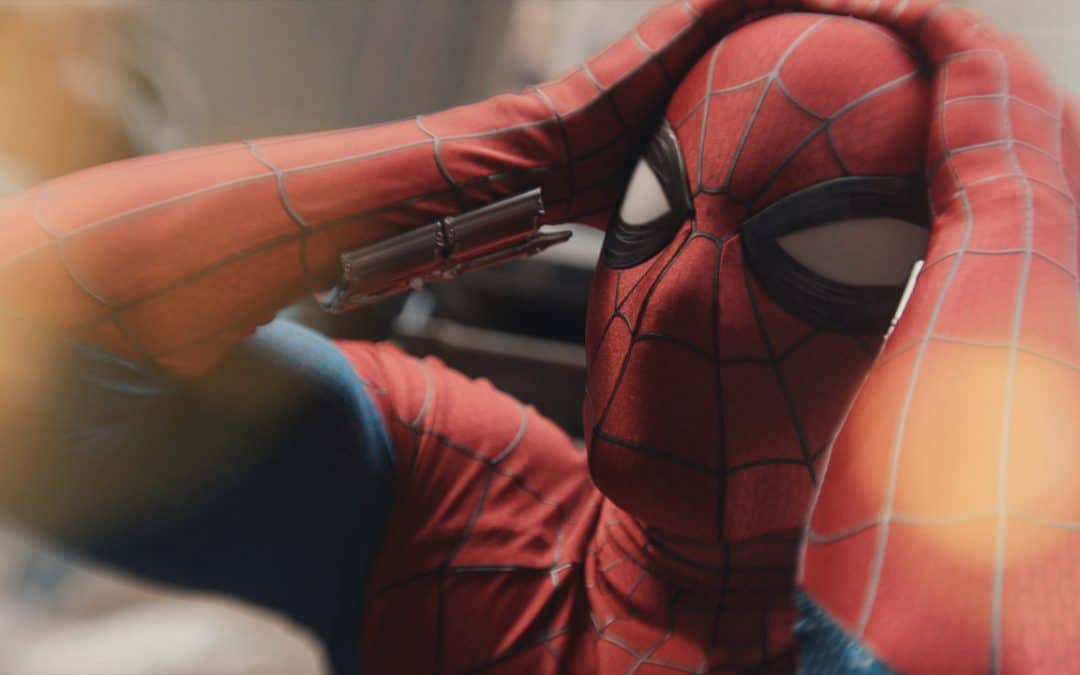
Spider-Man: Brand New Day — Far From Homecoming
Spider-Man: Brand New Day has the twists, the action, the romance and the welling up. It’s a whole-package Spider-Man film, determined to be more than just a step up. This is a big swing to a new level of storytelling for the web-slinger and probably the superhero’s finest hour on screen. Its rival is unsurprisingly 2004’s Spider-Man 2, which, uncoincidentally, hits on similar themes.
Brand New Day, however, sets a new bar for Marvel telling self-contained comic book stories in an interconnected universe. This could be the foundation stone on Marvel’s new quest for quality, and all it took was the streets.
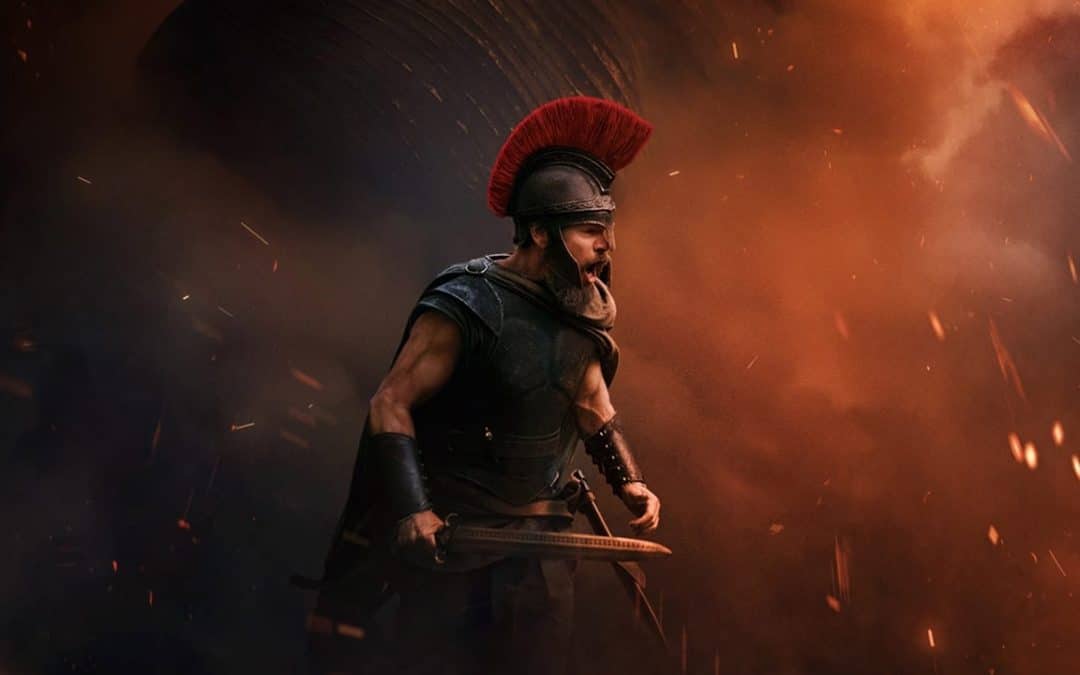
The Odyssey — Nolan’s Unifying Epic
Christopher Nolan takes a foundational text of Western culture and turns it up to ἕνδεκα. As a unification of his life’s work to date, who can tell how the man who turned a science biopic into a blockbuster will follow up a Greek poem that promises to break open the box office?
But forget the future, The Odyssey represents a very real now. It will shape culture in 2026, and maybe even beyond. It’s not perfect, gods no—that’s very much the point—but it’s breathtakingly impressive, and its waves will be felt for years.

Supergirl (Film Review) — Cosmic Swagger In A New Universe
Supergirl is a bit of a gamble, there’s no doubt—and a calculated move away from the bright Earth of Superman to an uncertain galaxy. Gunn and Safran are playing a long game to shape their connected universe just right, but that’s fine when they work out through layered pieces like this.
It may be grimy, but Supergirl has the jokes, action, universal outlook and cape that should carry through to audiences. Comic book films should be constantly asserting and reasserting the nature of heroism, and in Milly Alcock, the genre has a new icon.
All images: © Warner Bros. Pictures
Wuthering Heights
Release date: February 13, 2026
Directed by: Emerald Fennell
Written by: Emerald Fennell, Emily Brontë
Photographed by: Linus Sandgren
Edited by: Victoria Boydel
Score by: Anthony Willis (score), Charli xcx (songs)
Starring: Hong Chau, Martin Clunes, Jacob Elordi, Shazad Latif, Ewan Mitchell, Alison Oliver, Margot Robbie
Distributed by: Warner Bros. Pictures
Wuthering Heights: Trailer
If you like this try...
Little Women (2019)
Saltburn (2023)
Barbie (2023)

Recent Posts
Tony (Film Review) — An Appetising Entrée
[dsm_social_share_buttons dsm_view="icon" dsm_shape="circle" dsm_button_size="1px" dsm_icon_size="18px" _builder_version="4.27.4" _module_preset="default" custom_css_main_element="display:inline-block;||float:right;"...
Spider-Man: Brand New Day — Far From Homecoming
[dsm_social_share_buttons dsm_view="icon" dsm_shape="circle" dsm_button_size="1px" dsm_icon_size="18px" _builder_version="4.27.4" _module_preset="default" custom_css_main_element="display:inline-block;||float:right;"...
The Odyssey — Nolan’s Unifying Epic
[dsm_social_share_buttons dsm_view="icon" dsm_shape="circle" dsm_button_size="1px" dsm_icon_size="18px" _builder_version="4.27.4" _module_preset="default" custom_css_main_element="display:inline-block;||float:right;"...
Supergirl (Film Review) — Cosmic Swagger In A New Universe
[dsm_social_share_buttons dsm_view="icon" dsm_shape="circle" dsm_button_size="1px" dsm_icon_size="18px" _builder_version="4.27.4" _module_preset="default" custom_css_main_element="display:inline-block;||float:right;"...
0 Comments