
Francis Ford Coppola has a story to tell.
There comes a time… When it’s really difficult to rate a film. But if anyone can make that challenge of measuring folly and genius feel good, it’s going to be Francis Ford Coppola. No matter the quirks on his CV, his huge milestones of the 1970s are unimpeachable. So the thought of Megalopolis, his epic, self-funded exploration of art, creation and humanity’s future through the prism of an Ancient Roman spat, should be Bread and Circuses for any film fan.
In an alternate present-day, New York is recast as New Rome, a metropolis that’s fallen hook, line and sinker into the cycle of the end of the Roman Republic. The effortlessly watchable and lovingly intense Adam Driver is Cesar Catalina, genius creative architect and dreamer of a dysfunctional elite family headed by his bank-owning uncle Hamilton Crassus III (Jon Voigt).
Catalina is more than gifted; he can pause time. But as a man with time to waste, he still struggles to recognise his vision for the future, made possible by his invention of the incredible new material Megalon. To the establishment, the visionary is staging a coup on the city, and his fiercest critic is Giancarlo Esposito’s Mayor Frank Cicero. The pair’s ideological battle deepens when Cicero’s daughter, Julia (Nathalie Emmanuel), becomes romantically entangled with Catalina.
A lot is going on in Megalopolis, and it’s no surprise that not all of it sticks, but it’s conspicuous in a film about fantastical architecture. If anything, the scope of Coppola’s long-brewing opus isn’t big enough. It can’t possibly live up to the hype and the weight of incredible, sense-defying imagery crossing the breadth of film history—there are some undeniably jaw-dropping visuals—it isn’t anywhere near enough. What’s left scuffs the intrigue of the real and ancient conspiracies that inspired it, leaving the focus on its weakly sketched human connection.
The buildup to Megalopolis has pinned on Coppola’s extraordinary CV. Inarguable classics, troubled productions, unfathomable missteps as he veered from dictator to debtor. Here it’s the latter, with the partial sale of his vineyard helping to fund what struggles to break through as a vanity project.
For some viewers, Megalopolis will represent a place where cinema could have gone, a less narrative-led, fusion of extraordinary, expressionist visions. Its sweep isn’t just back to the height of Rome, but the innovative early days of cinema, like Fritz Lang’s Metropolis. But, like the elite struggling with the masses on the streets of New Rome, Megalopolis doesn’t do enough to sway the will of the cinema-going public.
The laboured parallel with ancient Rome is constant. It’s chiselled in graphic titles, although the early shot of the Beaux-Arts Grand Central Station reminds us that it’s been running through New York for some time. Still, Coppola chooses a niche part of the Roman Republic and rides on viewers’ familiarity with the Roman Empire. Cicero takes his name from the legendary orator and politician, a name—derived from chickpeas—that suggests a broad ideological difference from Catalina’s extreme wealth.
While Esposito is part of a weight of talent on display—most, like Jason Schwartzman and Dustin Hoffman, wasted—they all struggle in the sweeping scale. Shia LaBeouf has some fascinating moments on his particular journey to becoming a populist politician, but his character is not one of fiction’s great instigators. While swathes of Megalopolis plumb Shakespeare, it’s not smart enough to balance the intrigue and clowning, the broad brushstrokes of assassination, riot, heart attack and a Soviet satellite destroying half the city (named Carthage, of course). That’s most clear in the way it arranges its players—some characters disappear for long periods.
Perhaps the extended biography at the heart of this city runs even deeper than it seems. Soft and deep focus costs the action, but creates a gauche playground—dystopia to some, utopia to others—that could be Coppola’s career. In the magical fantasy element that later fuses with science fiction, Coppola could be wishing an artist’s ability to hold time was real. The many biographical and personal touches, including the potential naming of a newborn baby as Francis, suggest it is as much a lament as a self-evaluation. It just falls a bit short. It’s just missing a girder or two.
The Foundation
Bewildering, referential and scrappy, there are moments of genius in Megalopolis, but it’s hard to see how there couldn’t be. Perhaps a film better realised at a time it couldn’t so easily have been, the 1970s, it’s of most interest as a sprawling attempt by Coppola to cap and contain his extraordinary career.
A gleaming folly then, and one that does little for anyone on the screen. But despite its flaws, it’s an undeniable love letter to cinema, and every great director should be allowed one of those in their later years.
Share this Review

Review by Matt Goddard
Your next read:
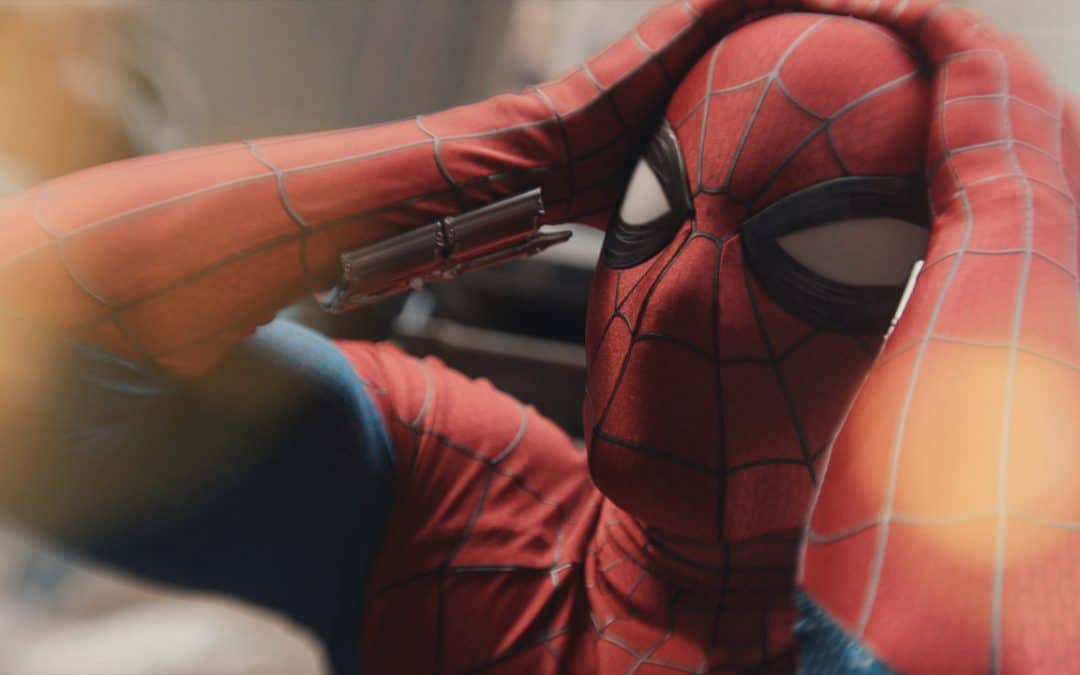
Spider-Man: Brand New Day — Far From Homecoming
Spider-Man: Brand New Day has the twists, the action, the romance and the welling up. It’s a whole-package Spider-Man film, determined to be more than just a step up. This is a big swing to a new level of storytelling for the web-slinger and probably the superhero’s finest hour on screen. Its rival is unsurprisingly 2004’s Spider-Man 2, which, uncoincidentally, hits on similar themes.
Brand New Day, however, sets a new bar for Marvel telling self-contained comic book stories in an interconnected universe. This could be the foundation stone on Marvel’s new quest for quality, and all it took was the streets.
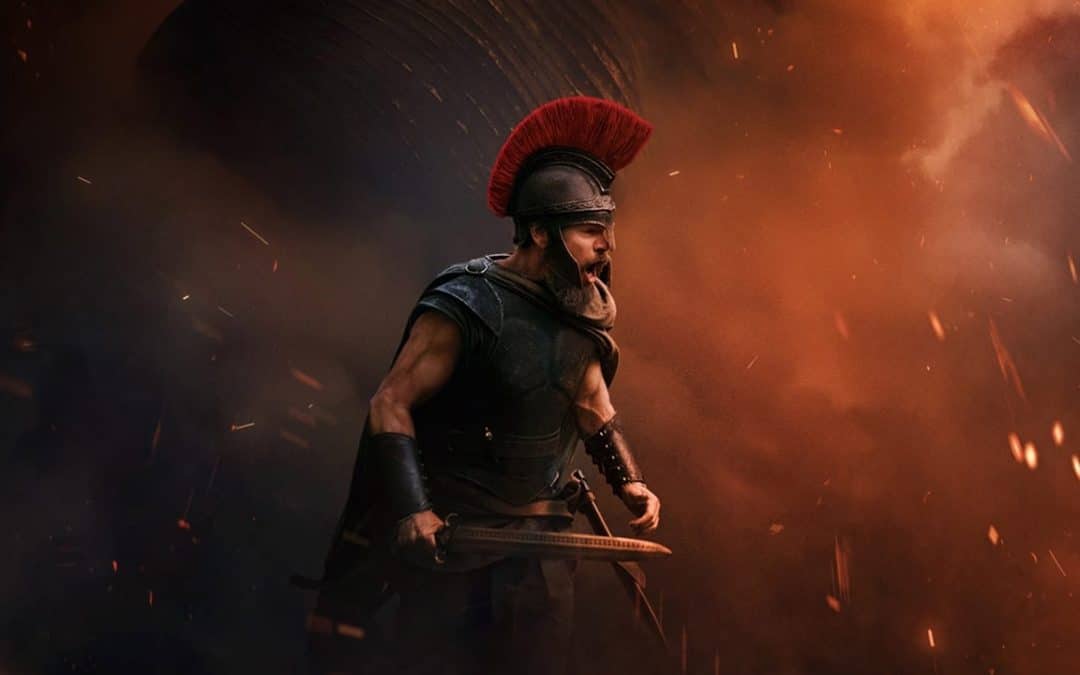
The Odyssey — Nolan’s Unifying Epic
Christopher Nolan takes a foundational text of Western culture and turns it up to ἕνδεκα. As a unification of his life’s work to date, who can tell how the man who turned a science biopic into a blockbuster will follow up a Greek poem that promises to break open the box office?
But forget the future, The Odyssey represents a very real now. It will shape culture in 2026, and maybe even beyond. It’s not perfect, gods no—that’s very much the point—but it’s breathtakingly impressive, and its waves will be felt for years.

Supergirl (Film Review) — Cosmic Swagger In A New Universe
Supergirl is a bit of a gamble, there’s no doubt—and a calculated move away from the bright Earth of Superman to an uncertain galaxy. Gunn and Safran are playing a long game to shape their connected universe just right, but that’s fine when they work out through layered pieces like this.
It may be grimy, but Supergirl has the jokes, action, universal outlook and cape that should carry through to audiences. Comic book films should be constantly asserting and reasserting the nature of heroism, and in Milly Alcock, the genre has a new icon.
All images: © Lionsgate
Megalopolis
Release date: September 27, 2026
Directed by: Francis Ford Coppola
Written by: Francis Ford Coppola
Photographed by: Mihai Mălaimare Jr.
Edited by: Cam McLauchlin, Glen Scantlebury
Score by: Osvaldo Golijov
Starring: Adam Driver, Nathalie Emmanuel, Giancarlo Esposito, Laurence Fishburne, Dustin Hoffman, Kathryn Hunter, Shia LaBeouf, Aubrey Plaza, Jon Voight
Distributed by: Lionsgate
Megalopolis: Trailer
If you like this try...
Metropolis(1927)
The Fountainhead (1949)
Ben Hur (1959)

Recent Posts
Tony (Film Review) — An Appetising Entrée
[dsm_social_share_buttons dsm_view="icon" dsm_shape="circle" dsm_button_size="1px" dsm_icon_size="18px" _builder_version="4.27.4" _module_preset="default" custom_css_main_element="display:inline-block;||float:right;"...
Spider-Man: Brand New Day — Far From Homecoming
[dsm_social_share_buttons dsm_view="icon" dsm_shape="circle" dsm_button_size="1px" dsm_icon_size="18px" _builder_version="4.27.4" _module_preset="default" custom_css_main_element="display:inline-block;||float:right;"...
The Odyssey — Nolan’s Unifying Epic
[dsm_social_share_buttons dsm_view="icon" dsm_shape="circle" dsm_button_size="1px" dsm_icon_size="18px" _builder_version="4.27.4" _module_preset="default" custom_css_main_element="display:inline-block;||float:right;"...
Supergirl (Film Review) — Cosmic Swagger In A New Universe
[dsm_social_share_buttons dsm_view="icon" dsm_shape="circle" dsm_button_size="1px" dsm_icon_size="18px" _builder_version="4.27.4" _module_preset="default" custom_css_main_element="display:inline-block;||float:right;"...
0 Comments